
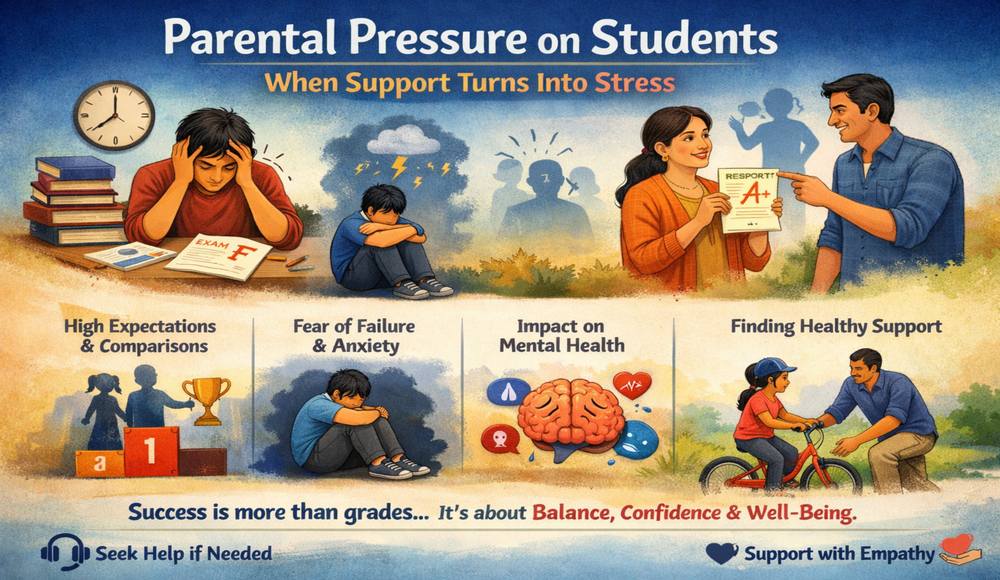
Most parents want the best for their children. Good grades, a stable career, and a “secure future” often come from a place of love and concern. But sometimes, parental pressure on students quietly crosses a line — shifting from encouragement to a source of constant stress and emotional strain.
In India especially, academic success is often seen as a reflection of good parenting. While this intention may be positive, academic parental pressure can unintentionally affect a child’s mental health, motivation, and overall well-being. If you’re a parent, educator, or student trying to understand this dynamic, this blog will help you see where pressure comes from, how it affects students, and what healthier support can look like. If you’re feeling overwhelmed, speaking with a professional, such as the best therapist online india, can help you navigate these challenges with clarity and compassion.
What Is Parental Pressure?
Parental pressure refers to the expectations, demands, or comparisons placed on children to perform in specific ways — most commonly in academics. It often shows up subtly rather than as outright criticism.
This pressure may include
- Constant focus on marks, ranks, or results
- Comparisons with siblings, classmates, or relatives
- Expectations to pursue a specific career path
- Limited space to explore interests outside academics
According to child development research reviewed by the American Psychological Association (APA), children thrive when expectations are balanced with emotional support and autonomy. When expectations become rigid or fear-driven, stress tends to replace motivation.
Causes of Parental Pressure
Understanding the causes of parental pressure can help parents reflect without guilt or blame. Often, pressure is rooted in parents’ own experiences and fears rather than a lack of care.
1. Fear of an Uncertain Future
Many parents worry about job competition, financial stability, and social status. In a rapidly changing world, academic success feels like the safest guarantee — even though it isn’t the only path.
2. Social Comparison and Cultural Expectations
Family gatherings, school meetings, and even casual conversations often revolve around grades and achievements. Over time, this comparison culture fuels pressure — both for parents and children.
3. Parents’ Unfulfilled Dreams
Sometimes, children are expected to live out paths their parents couldn’t pursue. This may be unintentional, but it can make children feel responsible for their parents’ happiness.
4. Misunderstanding Motivation
Some parents believe pressure is necessary for success. Research from the APA suggests that while structure helps, chronic pressure often increases anxiety rather than performance.
Examples of Parental Pressure in Everyday Life
Pressure doesn’t always come with shouting or punishment. Some examples of parental pressure are easy to miss
- “We’ve spent so much money on your education — you can’t waste it.”
- “Your cousin managed this rank. Why can’t you?”
- Monitoring marks more closely than emotional well-being
- Discouraging hobbies because they’re “not useful”
- Treating failure as disappointment rather than a learning moment
Over time, these messages can shape how students see themselves and their worth.
Effects of Parental Pressure on Students’ Academic Performance
At first glance, pressure might seem effective — some students do perform well academically. But research paints a more complex picture.
Studies referenced by Mental Health America suggest that excessive academic pressure is linked to
- Increased anxiety and exam fear
- Burnout and emotional exhaustion
- Reduced intrinsic motivation
- Difficulty concentrating and retaining information
In other words, while short-term results may improve, the effects of parental pressure on students academic performance often become negative over time. Learning shifts from curiosity to fear — fear of failure, disappointment, or rejection.
The Negative Effects of Parental Pressure on Mental Health
Beyond academics, the negative effects of parental pressure often show up emotionally and psychologically.
-
Anxiety and Chronic Stress
Students may constantly feel “on edge,” worried about meeting expectations. The National Institute of Mental Health (NIMH) explains that chronic stress during adolescence can increase the risk of anxiety disorders later in life.
-
Low Self-Esteem
When worth becomes tied to grades, children may struggle to feel “good enough” unless they succeed.
-
Fear of Failure
Instead of trying new things, students may avoid challenges altogether — not because they’re lazy, but because failure feels unsafe.
-
Emotional Distance from Parents
Ironically, pressure meant to “help” can weaken trust and communication, making children less likely to share struggles.
When Support Becomes Stress: A Simple Analogy
Think of support like holding a bicycle while a child learns to ride.
- Support helps them balance.
- Pressure is holding the seat so tightly they can’t steer on their own.
Children need guidance — but also space to wobble, fall, and learn.
-
How Parents Can Offer Healthier Support
Support doesn’t mean removing expectations entirely. It means reshaping them.
-
Focus on Effort, Not Just Outcomes
Instead of asking, “What marks did you get?” try, “How did you feel about that exam?”
-
Make Room for Conversations
Listen without immediately correcting or advising. Sometimes, children just want to be heard.
-
Normalize Struggle
Let children know that mistakes and setbacks are part of learning — not signs of failure.
-
Encourage Balance
Hobbies, rest, and friendships aren’t distractions; they’re protective factors for mental health.
According to the World Health Organization (WHO), emotionally supportive environments are key to healthy adolescent development — both academically and psychologically.
FAQ’s
A Gentle Reminder for Parents and Students
If you’re a parent reading this: your concern matters, and so does your child’s emotional safety.
If you’re a student: struggling under pressure doesn’t mean you’re weak — it means you’re human.
Support works best when it feels like encouragement, not a constant test.
Final Thoughts & Call to Action
Parental involvement plays a powerful role in a student’s life. When expectations are balanced with empathy, children feel safer to grow — academically and emotionally. When pressure replaces support, stress often takes its place.
This blog is for informational purposes only and does not replace professional advice. If academic stress or family pressure is affecting mental well-being, consider speaking with a licensed mental health professional who can offer personalized guidance and support.
Healthy success isn’t just about grades — it’s about resilience, confidence, and feeling understood along the way.
